· Jason Louro
How to make a top-down RPG like Zelda without coding
How to plan and build a top-down action RPG with towns, dialogue, locked doors, dungeons and a boss, without programming or drawing.
A top-down RPG in the style of the early Zelda games comes down to four things: a town where you get a goal, a path that's blocked, a dungeon that holds the key, and a boss at the end. You can build all four without code if you plan the game as a chain of small, testable steps. Then you can expand on this simple game loop with more quests, exploration, and story events.
Here's how to make that game with Chunkyard.
Plan the game on one page first
Before building anything, write the chain of events:
- The player starts in a village.
- The elder says a monster has blocked the bridge.
- The cave to the east holds a sword.
- The sword beats the monster at the bridge.
- Across the bridge is the dungeon with the boss.
Five steps is a complete game. Every step tells you what to build next, and each one can be tested on its own.
Step 1: Set the art style and the map
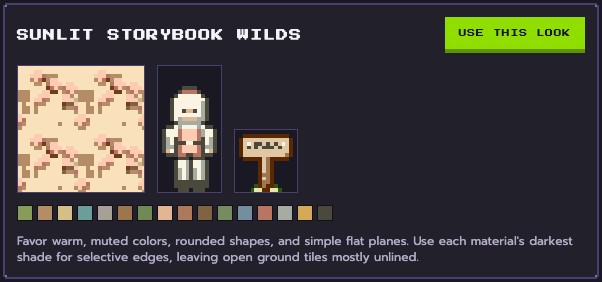
Pick a style kit for your game: palette, outlines, light and shading. Then lay out the village. Chunkyard supports hand-built maps as well as generated ones, which is what you want for an RPG, since every house and path should sit where you decide. Ask the chat to place a cottage, a shop and a well from the built-in structures, then add paths and fences. Each building can get its own interior that you walk into through the door.
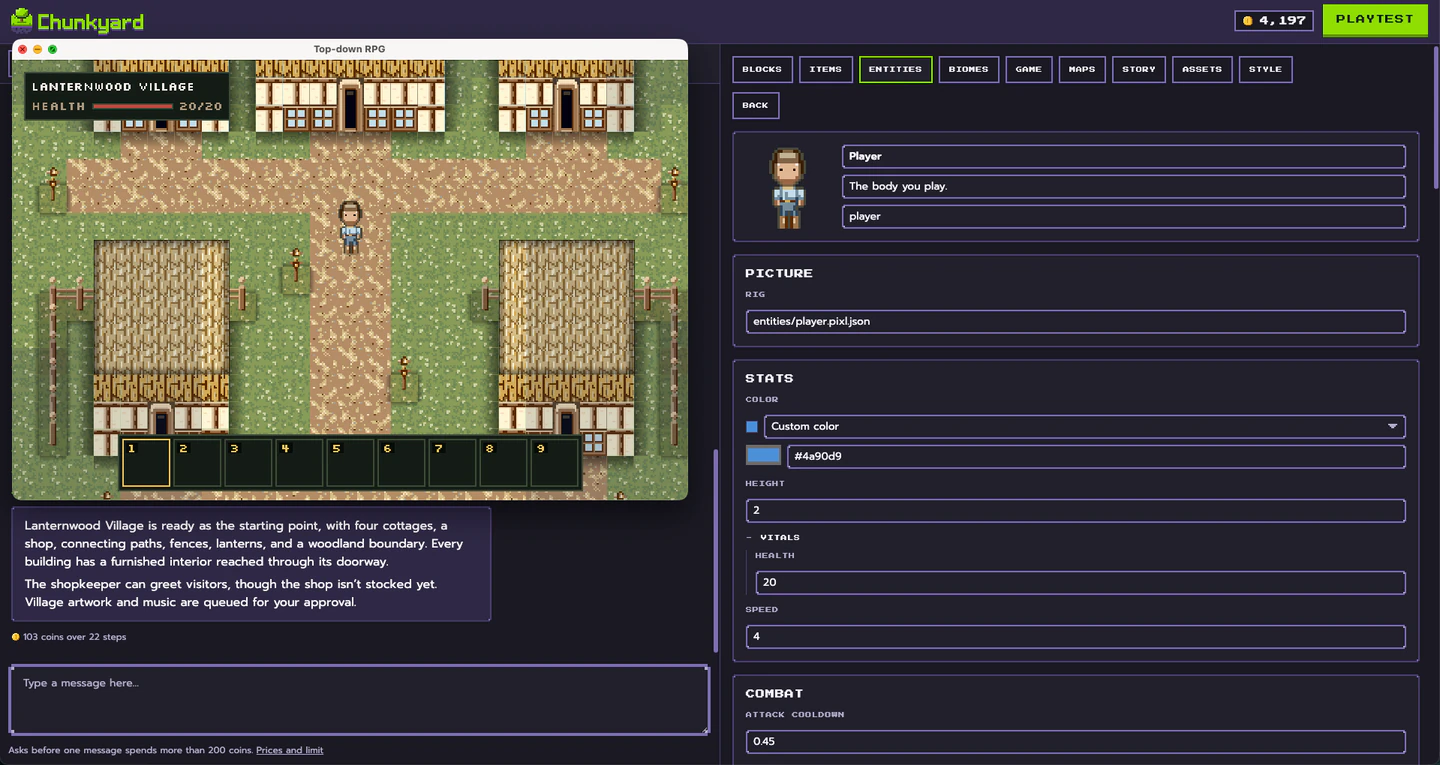
Here's what a style kit might look like in Chunkyard for your RPG:
Step 2: Add the player and one enemy
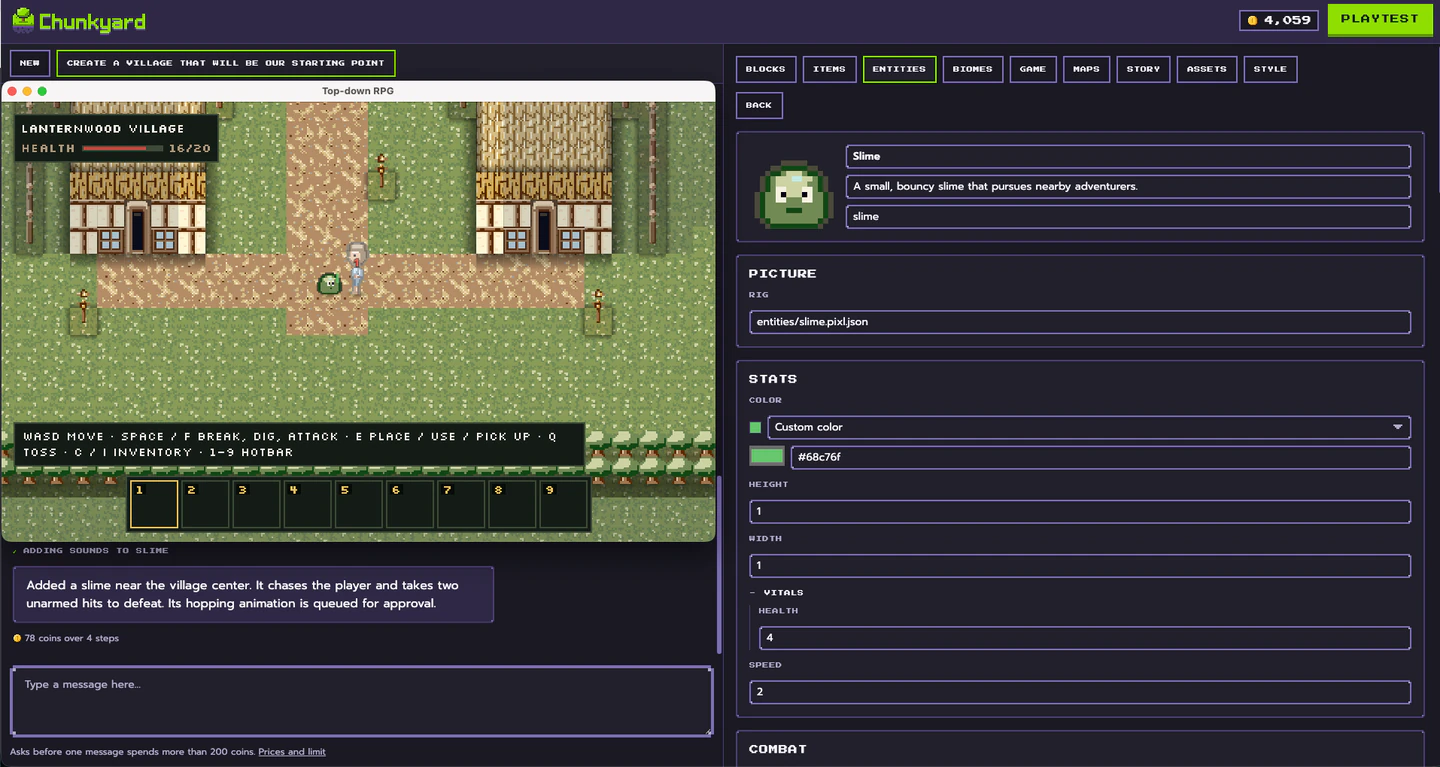
Get combat feeling right before you add anything else. Ask for a simple enemy, like "a slime that hops toward the player and takes two hits to defeat." Approve its drawing, playtest, and tune its speed, health and damage in its form until fighting it feels fair.
Step 3: Add people and dialogue
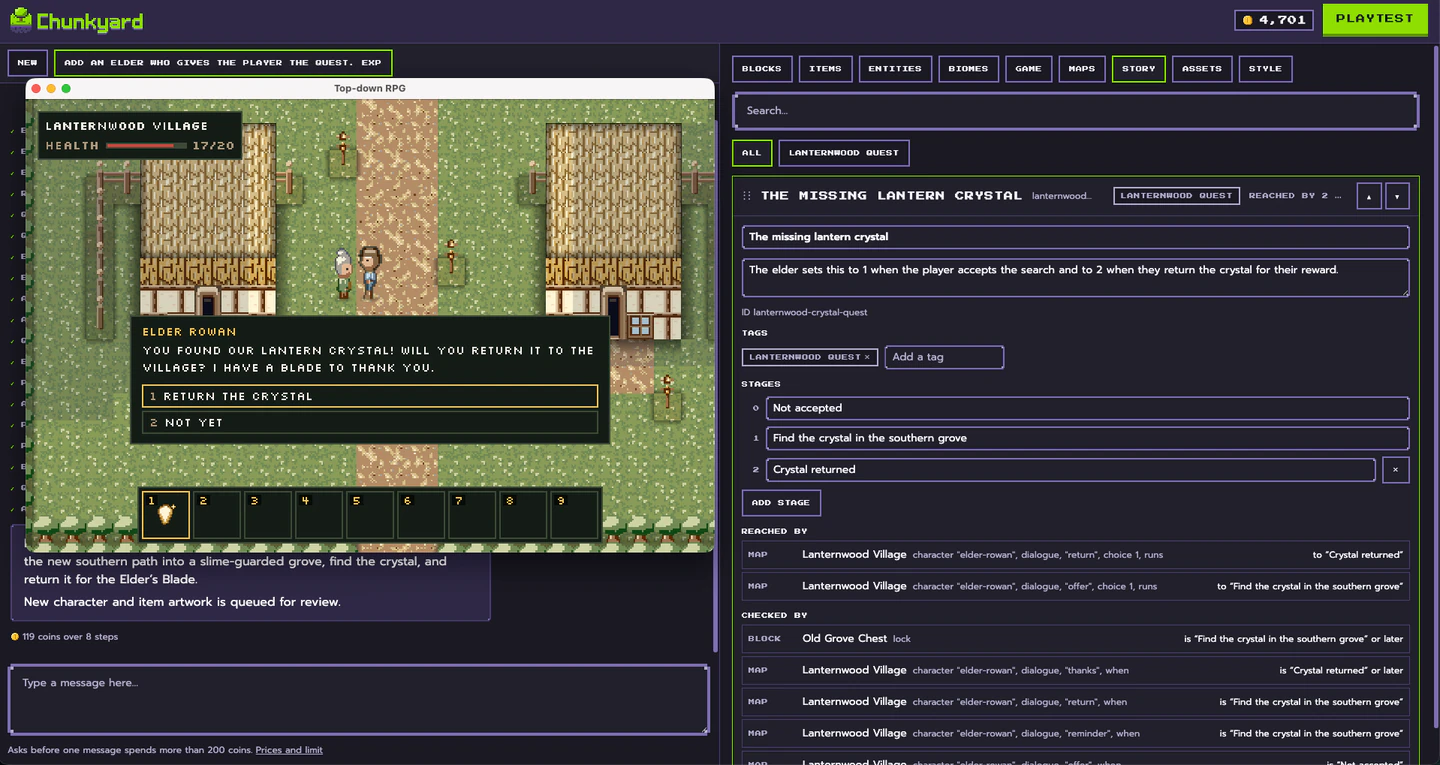
Ask for an elder who gives the player the quest. Chunkyard handles branching dialogue and milestones, which are how the game remembers things like "the player has talked to the elder." A milestone can also count up through a quest's stages. Later characters can say different things depending on them, and Studio's Story tab lists every milestone and everywhere it's used.
Step 4: Block the path
RPGs are built on locks and keys. A bridge blocked until you have the sword. A door that needs a key. A cave that's too dark without a lantern. Chunkyard supports locks on doors, chests and passages, and trigger areas that run when the player walks in. So "the gate opens when the player has the sword" is one rule you ask for and then test.
Step 5: Build the dungeon
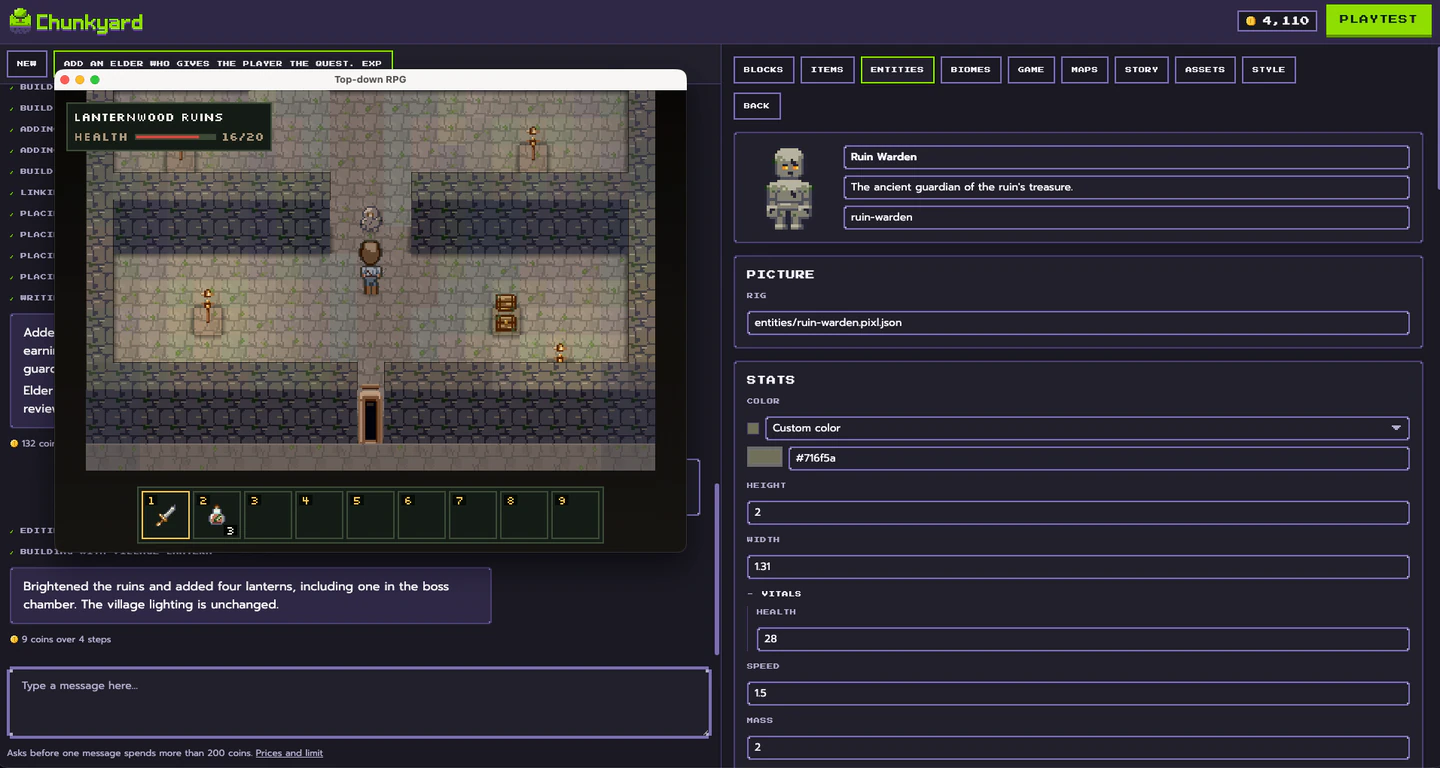
A good first dungeon is a handful of rooms:
- an entrance room with one easy enemy
- a room with a locked door and a key elsewhere
- a room you cross by stepping around lava
- the boss room
Keep it short. A dungeon you can finish in five minutes is better than one you abandon halfway through building.
Step 6: Add the boss
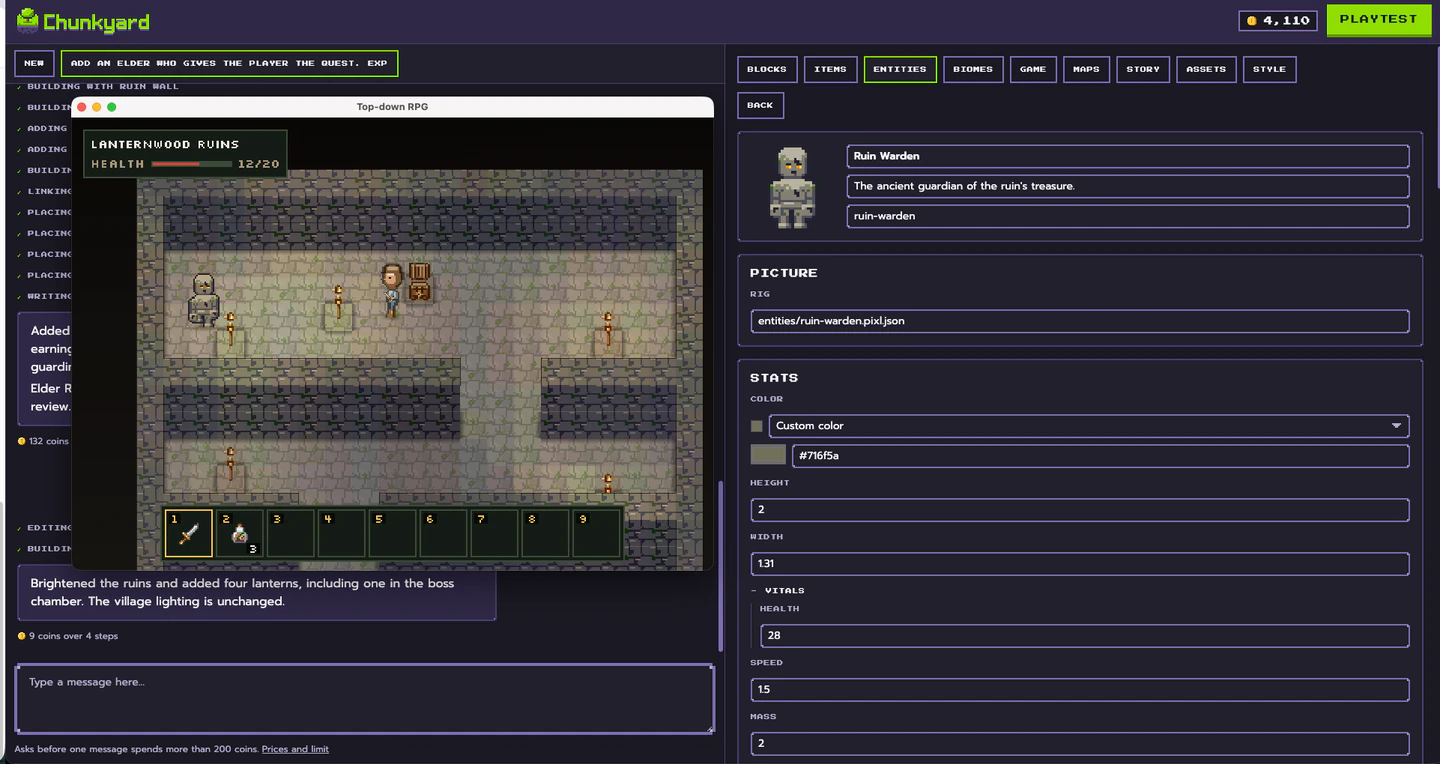
A first boss can simply be a tougher creature: more health, harder hits, and armor that softens your blows. Give it something to run when it dies, like setting the milestone that unlocks the way out, or ending the game and rolling the credits.
Step 7: Add loot and a shop
Give the player something to spend coins on: a better sword, a bow and arrows, armor, potions that restore health. A shop in the village is a reason to come back between dungeons.
What to leave out of your first RPG
- Turn-based battles. Chunkyard is built for real-time, top-down combat. If you want turn-based JRPG battles, RPG Maker is the better tool.
- Cutscenes. Use dialogue and triggers instead.
- A huge map. One village, one cave and one dungeon is a full game.
Make it yours
The structure above is a skeleton. What makes the game yours is what you hang on it: a village of frogs, a dungeon inside a giant tree, a boss who's secretly the elder's lost pet.
For collecting creatures instead of swords, the same steps work with companions in place of weapons. And if you're choosing tools, I wrote an honest comparison of RPG Maker, GDevelop and Chunkyard.